Demographic Shifts in Risk Tolerance Across Time-Zoned International Hold'em Networks
Viktor Zimmermann · Jun 3, 2026
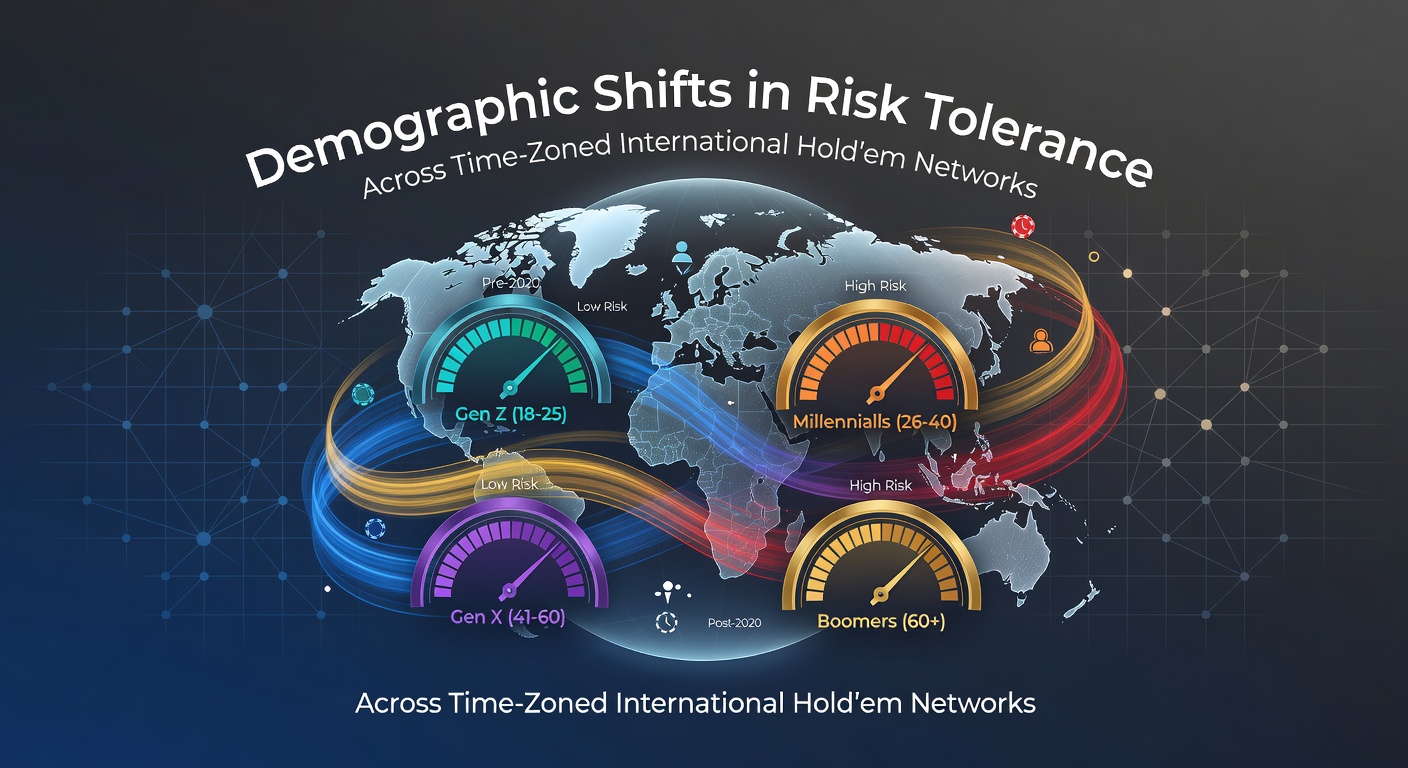
Demographic Shifts in Risk Tolerance Across Time-Zoned International Hold'em Networks
International Hold'em networks operate across multiple time zones where player pools shift continuously and demographic patterns emerge in risk tolerance levels that researchers track through aggregated session data and behavioral metrics. Networks spanning Asia, Europe, and the Americas see distinct cohorts logging in during overlapping peak hours, and these patterns produce measurable differences in betting aggression, fold frequencies, and all-in call rates according to platform analytics.
Time Zone Overlaps and Player Composition
Players from the Asia-Pacific region often dominate early morning UTC sessions while European and North American participants increase activity during evening windows in their local zones, creating blended tables where risk profiles interact in real time. Data from multi-site operators shows that participants aged 18-34 tend to occupy seats during these crossover periods at higher rates than older groups, and their collective decisions influence pot sizes and variance levels across the network. Observers note that these overlaps generate consistent statistical signatures where younger demographics exhibit elevated pre-flop raise percentages compared to sessions dominated by a single regional group.
June 2026 schedules on major platforms reflect these established rhythms with additional tournament series timed to capture cross-zone traffic, and participation logs indicate sustained growth in mixed-age tables during those windows. Regulatory filings from the Nevada Gaming Control Board document similar trends in licensed online operations where session timestamps correlate with demographic tags supplied during account verification.
Measuring Risk Tolerance Through Behavioral Indicators
Analysts quantify risk tolerance using metrics such as aggression factor, continuation bet frequency, and showdown rates rather than self-reported surveys, and longitudinal studies reveal gradual changes across age brackets over multi-year periods. Research compiled by the Australian Institute of Family Studies tracks how 25-40 year old cohorts in networked Hold'em environments adjust their three-bet ranges when competing against players from distant time zones, often expanding those ranges during late-night local hours when fatigue factors enter the equation.
These adjustments appear in network-wide datasets as small but persistent elevations in variance, particularly when North American players join tables already populated by Asian participants who logged in several hours earlier. The resulting hand histories allow platforms to segment behavior by registration time and verified location, producing heat maps that highlight zones where risk-seeking spikes occur most reliably.
Regional Demographic Patterns and Network Effects
European players registered through platforms licensed under Malta Gaming Authority guidelines contribute to afternoon UTC sessions with different risk signatures than their North American counterparts, and these differences compound when time zone drift aligns multiple regions simultaneously. Canadian provincial data from the Alcohol and Gaming Commission of Ontario shows comparable segmentation where verified accounts from certain provinces display steadier call frequencies during early morning local play compared to evening blocks.
One study revealed that accounts verified in the 45-plus age category maintain tighter ranges across all time zones, whereas 21-30 verified accounts increase bluff frequencies when tables include participants from three or more regions. Network algorithms adjust matchmaking parameters to balance these tendencies, yet raw data still captures the underlying demographic signals that drive overall table dynamics.
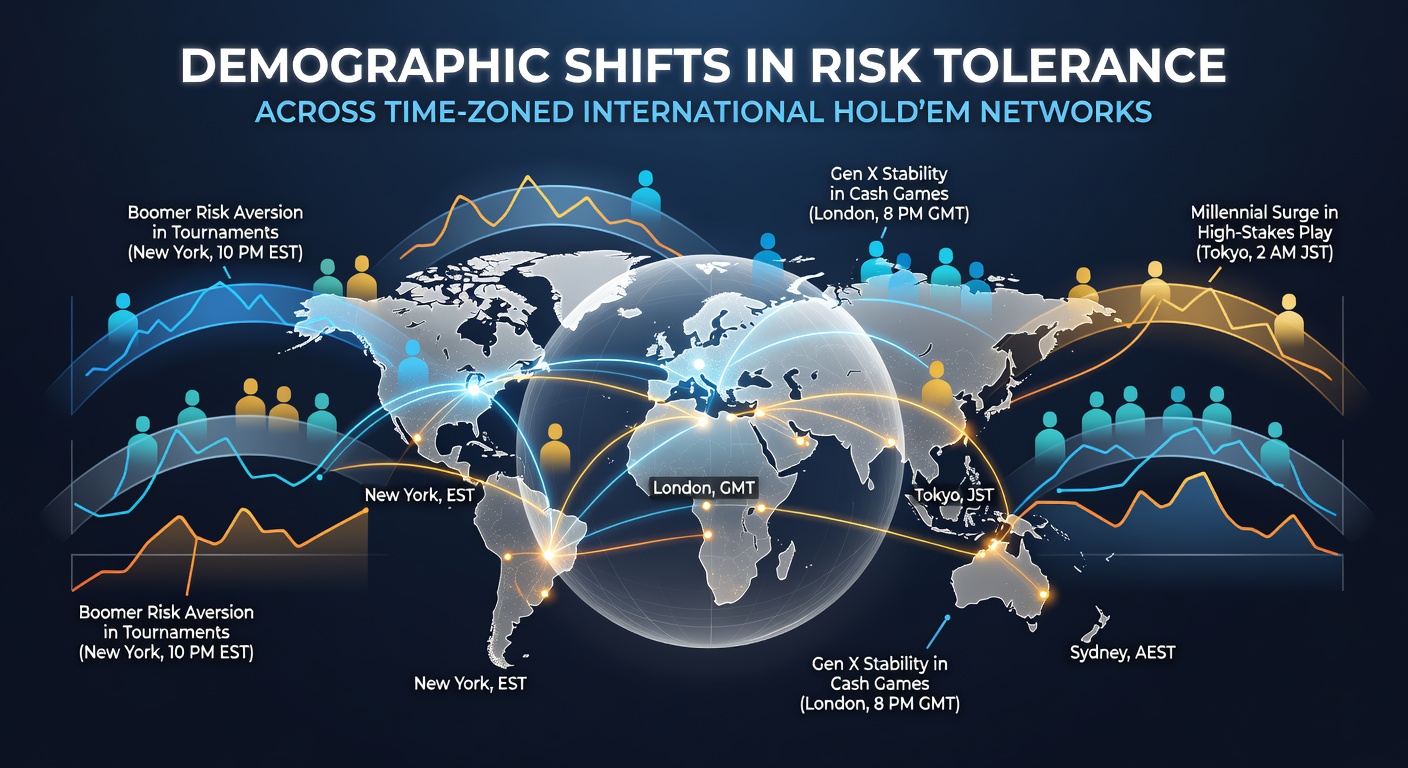
Longitudinal Changes Observed Through 2026
Platform reports indicate that the proportion of verified accounts in the 35-50 bracket grew steadily between 2023 and 2026, coinciding with measurable compression in average risk metrics during certain crossover hours. This shift registers most clearly in datasets filtered by registration date, where newer accounts from that age range show initial caution that gradually aligns with established network averages over subsequent months of play.
June 2026 tournament calendars on international sites incorporated additional satellite structures timed for maximum zone coverage, and early participation figures suggest continued representation from all major demographic segments. These events supply fresh hand samples that researchers use to update models tracking how risk tolerance evolves within specific age and location combinations.
Conclusion
Time-zoned international Hold'em networks continue to generate detailed behavioral datasets that reveal ongoing demographic shifts in risk tolerance, and these patterns inform both platform operations and regulatory oversight across multiple jurisdictions. Aggregated metrics from operators and oversight bodies such as the Nevada Gaming Control Board alongside academic analyses from institutions like the Australian Institute of Family Studies provide the factual foundation for understanding how age, location, and session timing interact within these environments. The resulting insights remain embedded in the operational records of networks that span global time zones and maintain consistent data collection practices.