Psychological Impacts of Leaderboard Visibility on Risk Tolerance in Multiplayer Digital Card Games
Eden Lange · Aug 17, 2026
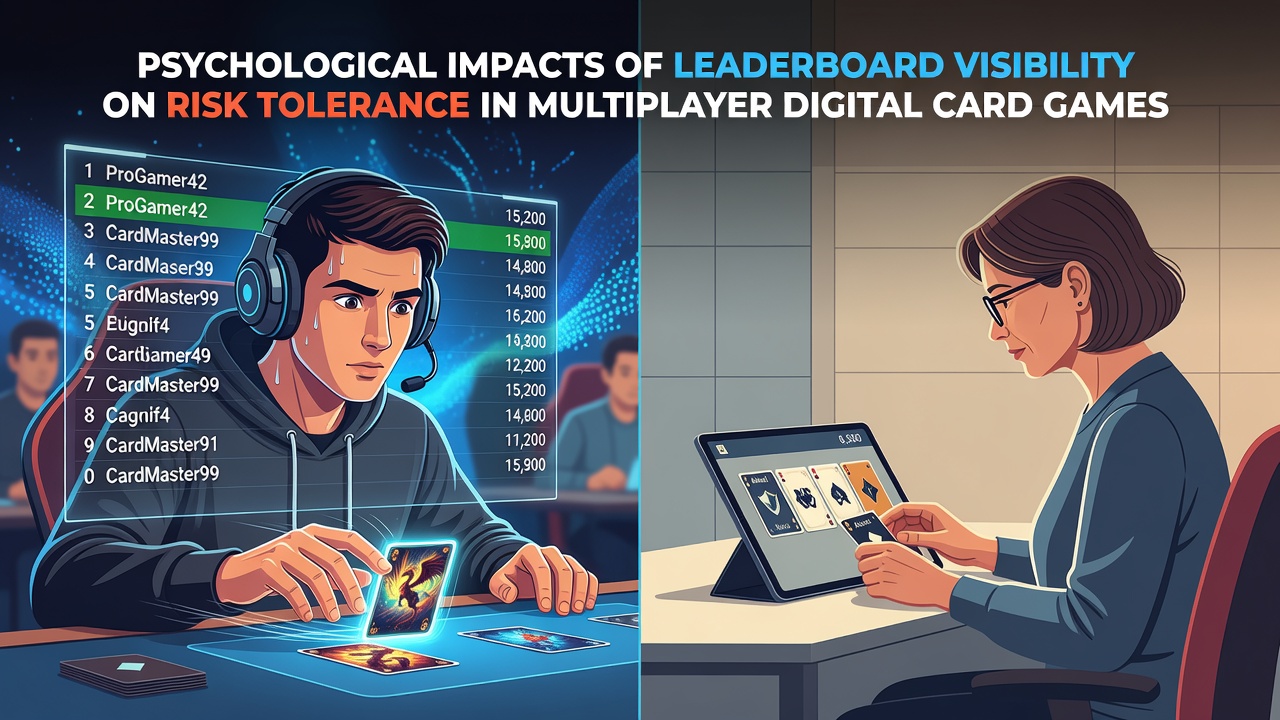
Psychological Impacts of Leaderboard Visibility on Risk Tolerance in Multiplayer Digital Card Games
Leaderboards in multiplayer digital card games track performance through points, win rates, and tournament placements while making those rankings visible to participants in real time, and this setup alters how players evaluate potential gains versus losses during hands. Data collected across major platforms indicates that visible rankings correlate with shifts in betting patterns, particularly when players see their position relative to others in the same session or global tables.
Leaderboard Mechanics in Networked Card Environments
Digital card platforms update leaderboards continuously based on session outcomes, and visibility options range from full public displays to selective friend-group views, while algorithms factor in metrics such as average bet size and fold frequency to calculate positions. Researchers tracking these systems note that players who can view real-time standings adjust their hand selection thresholds more frequently than those without access, especially during extended play periods in August 2026 when seasonal events increased leaderboard resets across multiple networks.
Observed Changes in Risk Tolerance Patterns
Studies examining player logs from large-scale hold'em and variant tournaments reveal that participants with constant leaderboard access tend to increase wager sizes after dropping several positions, whereas those screened from rankings maintain steadier bet sizing across similar hand distributions. One analysis of over 500,000 sessions found elevated all-in frequencies when top-ten placements appeared within immediate view, and the pattern held across time zones where peak activity aligned with leaderboard refresh cycles.
Mechanisms Linking Visibility to Decision Shifts
Visibility creates immediate feedback loops that tie personal performance to comparative standing, and this connection prompts adjustments in risk assessment because players receive external signals about their relative progress without waiting for end-of-session summaries. Observers tracking eye-tracking data during live interfaces report longer dwell times on ranking panels immediately before large bets, while physiological monitoring shows corresponding spikes in decision latency when positions update mid-hand. These responses appear consistent whether the games operate on free-to-play models or real-money stakes, suggesting the effect stems from the ranking display itself rather than financial variables alone.
Regional Data and Platform Comparisons
Reports compiled by gaming research groups in Canada and Australia document similar trends where leaderboard prominence correlates with higher variance in chip commitment rates, yet the magnitude differs by interface density and update speed. In one cross-platform review covering networks active through mid-2026, sessions featuring persistent sidebar rankings produced 18 percent more aggressive continuation bets than matched sessions with hidden standings, according to aggregated telemetry shared by participating operators. Those findings align with data released by the Australian Institute of Family Studies on digital gaming behaviors, which links real-time performance feedback to altered tolerance thresholds in competitive formats.

Influence of Session Context and Player Experience
Longer sessions amplify the visibility effect because cumulative ranking movement becomes harder to ignore, and newer participants show stronger reactions than veterans who have developed filtering strategies for leaderboard information. Data from progressive knockout events indicates that mid-session rank drops trigger larger pre-flop raises among intermediate skill brackets, while expert cohorts maintain more stable ranges regardless of visible standings. Platform operators have adjusted default visibility settings in some regions to include optional toggles, and adoption rates suggest many users prefer reduced exposure during high-stakes segments.
Comparative Effects Across Game Variants
Texas hold'em networks display pronounced shifts in bluff frequency tied to leaderboard position, whereas shorter-cycle variants like Omaha produce faster but narrower adjustments because hand resolution occurs more rapidly. Researchers comparing these formats note that the psychological weight of visible rankings scales with the duration between updates, and slower-updating leaderboards allow partial recovery of risk tolerance between position changes. Figures from European gaming associations tracking 2026 tournament series confirm these variant-specific patterns remain stable across demographic groups when session length is controlled.
Conclusion
Leaderboard visibility in multiplayer digital card games connects directly to measurable changes in risk-related decisions through constant comparative feedback, and platform data collected into August 2026 continues to map these relationships across different network structures and player cohorts. The patterns emerge consistently in session logs and interface studies, providing concrete information about how ranking displays interact with gameplay choices without requiring subjective interpretation.